A different conversation at 50
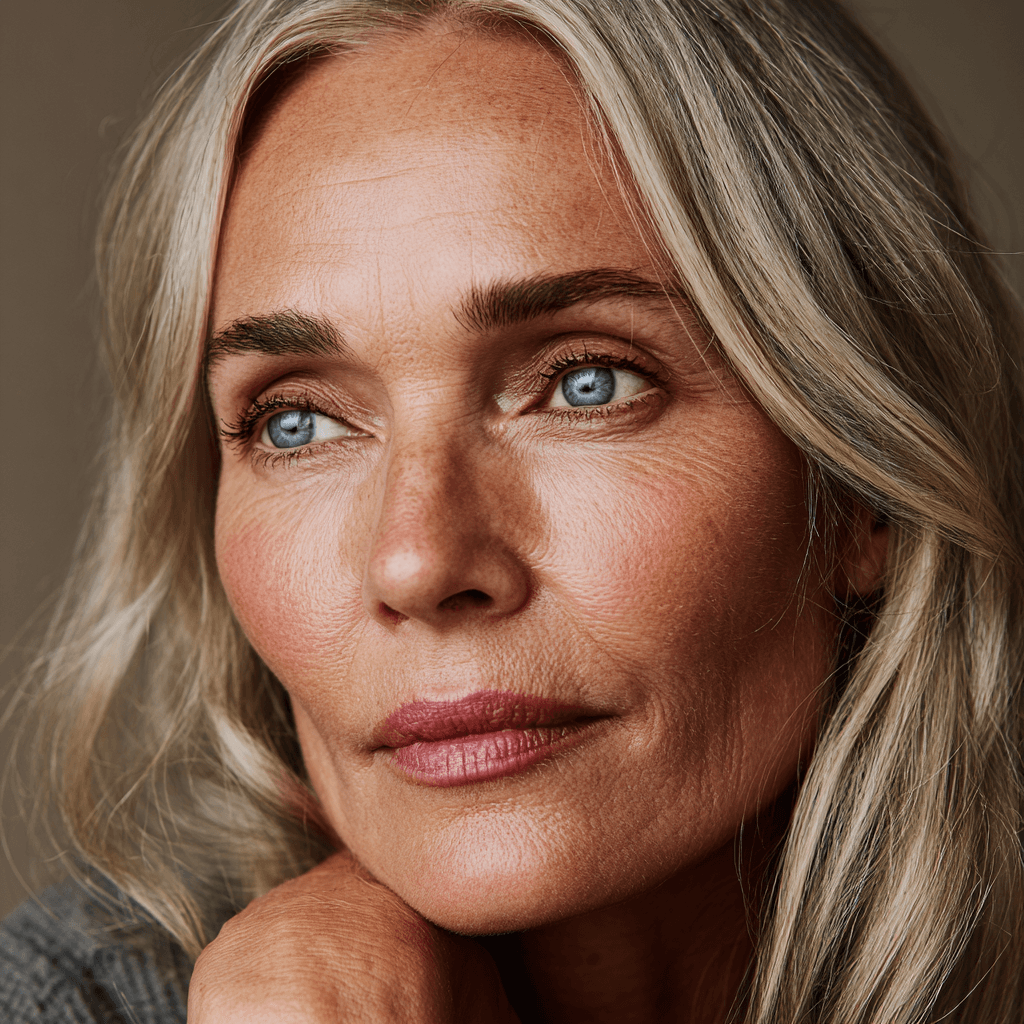
When a woman in her 50s sits down in my consultation room, the conversation is almost always different from the one I have with someone in their 30s. There's less interest in chasing youth. There's more interest in looking like a well-rested version of herself. The brief is usually some variation of: "I don't want to look done. I want to look like I'm taking care of myself."
That's the right brief. And the good news is that aesthetic medicine has more to offer the 50s face than it ever has — provided you know which treatments are actually evidence-based, and which are marketing.
What's actually happening to your skin at 50
By your 50s, three things are usually working together:
Collagen and elastin have declined significantly. You've lost around a third of your dermal collagen compared to your 20s. The scaffolding that gives skin its bounce is thinner.
Hyaluronic acid stores have dropped. Skin holds less water. That's the "papery" quality that comes and goes with the weather.
Bone and fat remodelling have shifted facial structure. The mid-face flattens slightly. The jawline softens. Light hits the face differently than it did ten years ago.
These are three different problems. They need three different solutions. One treatment alone — whatever the marketing claims — won't address all of them.
The skincare foundation that matters more, not less
In your 50s, your daily routine matters more than in any previous decade. Specifically:
A medical-grade retinoid at night. Not a high-street retinol. Something like tretinoin or a prescription-strength alternative, used three to five nights a week, is the single most evidence-based topical intervention for ageing skin.
Vitamin C in the morning. Antioxidant protection against the free-radical damage that continues throughout the day.
Daily SPF 50. UV exposure is responsible for around 80% of visible facial ageing. There is no aesthetic treatment that out-performs daily sun protection over a decade.
A barrier-supporting moisturiser. Skin at 50 holds water less easily. Ceramides, glycerin, and panthenol help.
If you're not doing these four things, no injectable will give you its full result.
The injectable that actually changes 50s skin: Profhilo
For genuine improvement in skin quality at 50, Profhilo is the most underrated injectable available. It's a stabilised hyaluronic acid that hydrates the dermis and stimulates fibroblasts to produce new collagen and elastin. It isn't a filler — it doesn't add volume or change your features.
In 50s skin, the result tends to be more dramatic than in younger skin, because there's more to gain. Clients commonly notice firmer skin texture, fewer fine lines, and a luminous quality that returns to the face. Two sessions four weeks apart, with maintenance every six months.
When Botox still makes sense — and when it doesn't
Botox at 50 is a more careful conversation than Botox at 35. The wrong dose, in the wrong place, can give you exactly the "frozen" look you want to avoid.
What works at 50 is small, conservative dosing aimed at softening — not eliminating — dynamic lines. Forehead lines, frown lines, and crow's feet still respond well. The goal is to look unworried, not unable to move.
What doesn't work as well at 50 is treating static lines (the ones visible at rest) with Botox alone. Those need a combination approach — usually Profhilo for skin quality, sometimes filler for structural support, and Botox to stop the muscle reinforcing the line.
The treatments I quietly do not recommend at 50
High-dose dermal filler to "lift" the face. It often makes 50s faces look heavier, not younger.
Aggressive laser resurfacing without a skin pre-conditioning protocol. Recovery is longer, and the risk of post-inflammatory pigmentation is real.
Single-treatment plans. The skin changes happening at 50 took twenty years. You will not reverse them in one session.
What a realistic plan looks like
For most of my 50s clients, the first six months looks something like this. A consultation and skincare audit. Two Profhilo sessions, four weeks apart. A skin booster like Jalupro or Sunekos to address texture and crepiness. Possibly a small, conservative dose of Botox in the upper face. A course of gentle peels to maintain cell turnover.
That combination — done well, with a prescriber who sees your face every six to eight weeks — produces results that look like good genetics and good sleep. Not like cosmetic intervention.
The honest bit
Ageing well isn't about looking 30 at 50. It's about looking like you're ageing on your own terms — rested, hydrated, healthy, recognisable. The 50s face has earned its character, and the best aesthetic medicine honours that rather than erases it.
If you're thinking about starting, the first step is a free consultation. I'll tell you honestly what would help, what wouldn't, and what isn't worth doing yet.