When skin looks tired rather than lined
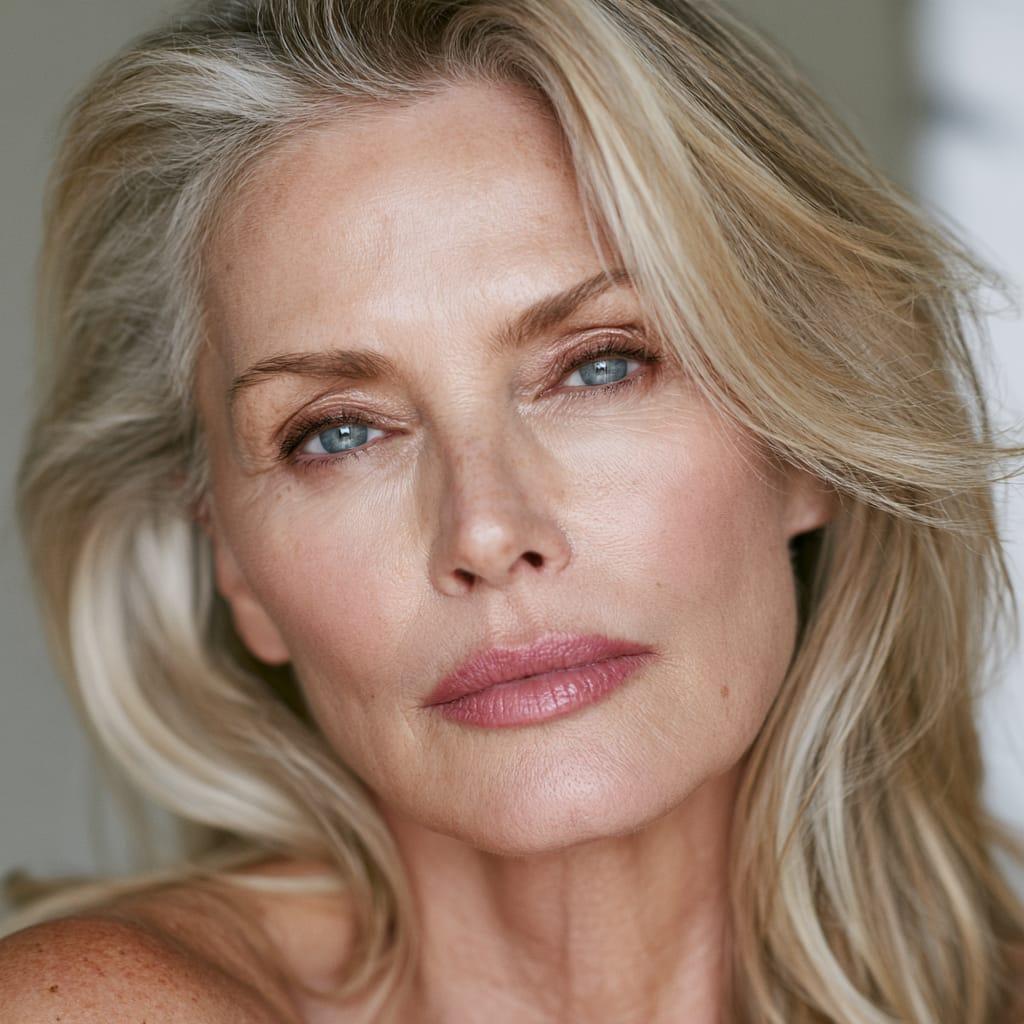
There's a particular conversation I have a lot with clients in their 40s and 50s. They sit down and say they don't really mind their lines. What bothers them is that their skin looks tired. It's lost its bounce. Makeup sits differently. The cheeks look a little flatter and the texture has gone slightly crepey, especially in certain lights.
That isn't a wrinkle problem, so anti-wrinkle injections won't fix it. It isn't really a volume problem either, so filler isn't the obvious answer. It's a skin-quality problem, and more specifically a collagen problem. As we get older, and particularly through perimenopause and menopause, the skin makes less collagen and becomes thinner and less firm. The face starts to look less supported, even when the structure underneath hasn't changed much.
Lenisna is one of the treatments I use for exactly this.
What Lenisna is and how it works
Lenisna is made by VAIM in Korea, the same company that makes Juvelook. Like Juvelook, it combines PDLLA (poly-D,L-lactic acid) with hyaluronic acid, and the two ingredients work on different timelines.
The hyaluronic acid hydrates the skin straight away, so there's a modest freshness in the first couple of weeks. The PDLLA particles sit in the skin and gradually break down, and as they do they prompt your fibroblasts to make new collagen. That's where the real change comes from: firmer, thicker, smoother skin built by your own body, rather than product sitting under the surface.
Because it's your own collagen doing the work, the result looks natural. Nobody looks at you and sees a treatment. They just see skin that looks healthier.
Who it suits, and who it doesn't
Lenisna tends to suit people whose main concerns are loss of firmness and bounce, crepey texture on the cheeks and lower face, mild laxity, and skin that has thinned with age or through menopause. It's a full-face treatment, so it's about overall skin quality rather than one specific line.
It isn't the right tool for everything. If you have significant sagging or heavy jowls, Lenisna alone won't lift them, and I'd rather tell you that at the start. If you've lost a lot of structural volume, for example in the cheeks or temples, filler may be needed to restore support, sometimes alongside a collagen treatment. If your main concern is expression lines, that's a different treatment. And if you have active skin infection or inflammation, or you're pregnant or breastfeeding, we wait.
How it differs from Juvelook and Profhilo
Clients often ask me how Lenisna compares with the other skin-quality treatments I offer, so here's the plain version.
Juvelook and Lenisna are siblings. Juvelook is the lighter of the two and suits delicate areas like under the eyes. Lenisna has a higher concentration of PDLLA, which makes it better suited to deeper, structural concerns across the face.
Profhilo is different. It's a high-concentration hyaluronic acid that hydrates deeply and improves laxity. It's a course of two sessions four weeks apart, with maintenance every six to nine months, and it's wonderful for dehydrated, dull skin that needs a lift in glow. Lenisna is more about rebuilding collagen, so its results build more gradually and tend to last longer.
Neither is better in the abstract. If your skin mostly needs hydration and luminosity, Profhilo is often my first choice. If it has genuinely lost firmness and thickness, Lenisna usually makes more sense. Some people benefit from both over time, and I'll plan that with you rather than sell you everything at once.
What a session involves, and why it's a course
Every treatment starts with a consultation, where I'll look at your skin closely, take your medical history, and talk through what you'd like to change. On the day, a session takes around 45 to 60 minutes. The skin is cleansed and the product is placed across the treatment areas using fine injections. I'll talk you through comfort options beforehand.
Downtime is minimal. Mild swelling, redness or small bruises can appear and usually settle within a few days, so most people carry on with their day.
Lenisna is a course of three sessions spaced a few weeks apart. Collagen building is gradual, and each session builds on the last. One session will do something, but the course is where the result comes from. After a full course, results commonly last 12 months or more, with maintenance usually around once a year.
A realistic timeline, and why November works
Expect a little hydration in the first couple of weeks, then gradual improvement over roughly 4 to 12 weeks as new collagen forms, continuing after your final session. It's a slow, steady change rather than an overnight one, and results vary from person to person.
That's why I like starting in November. If you begin a course now, your skin is quietly building through December, and the improvement keeps developing into the new year, just when winter tends to leave everyone looking a bit grey.
At Verse, Lenisna is £200 for a single session or £540 for a course of three.
If your skin has lost its bounce and you'd like an honest opinion on whether Lenisna is the right fit, book a consultation. It costs £20 and is redeemable against treatment. I'll assess your skin properly and tell you what I think will genuinely help, even if that turns out to be something else.